
This month's Book Nook topic is...
Building Perspective-Taking Skills with
Duck! Rabbit!
One of the most important things children learn―long before they can put it into words―is that two people can look at the same thing and see something completely different. Perspective-taking is simply the ability to understand that other people have different thoughts and feelings than our own and this influences what they say and do. Books are one of the best tools for helping children learn about other people’s perspectives.
Let's get started!
The Book:
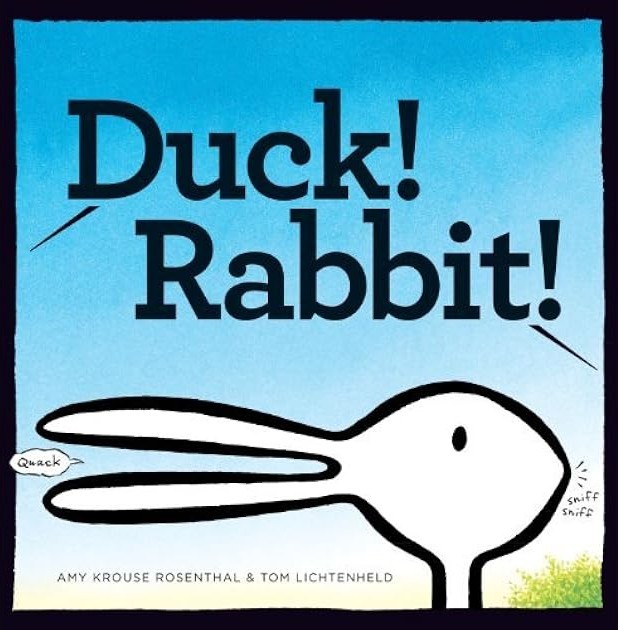
Duck! Rabbit! by Amy Krouse Rosenthal & Tom Lichtenheld
Why we chose this book
This book is built on a single optical illusion: is it a duck or a rabbit? Two off-page voices debate this question, and neither one is wrong―they’re just seeing things differently!
The simplicity of this book makes it a natural starting point for young children who are just beginning to notice that others have different perspectives. The illustration gives children a concrete example of what it looks like when two people see the same thing differently.
The First Reading: Getting to Know the Story
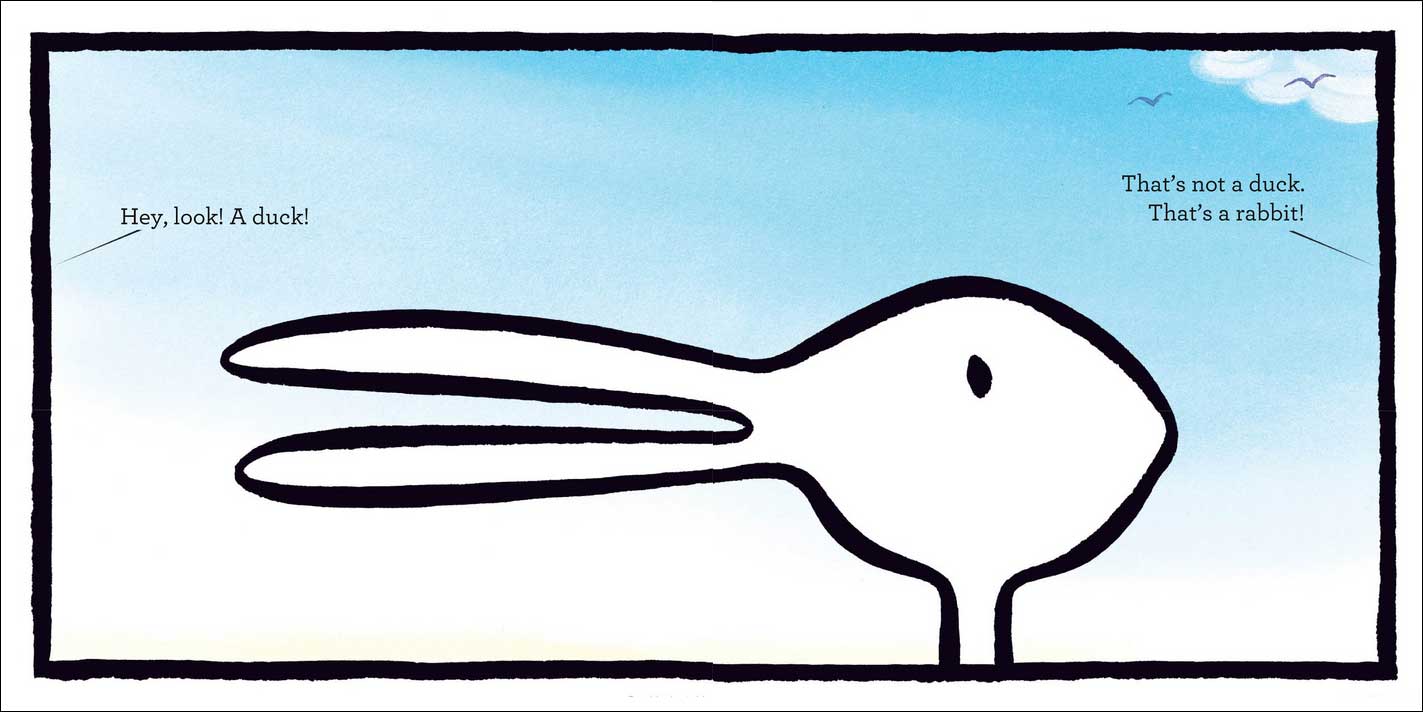
The first reading is all about helping the child gain an overall understanding of the story. Keep the story moving and emphasize the disagreement between the two voices about what they see in the picture. Over the course of the book, aim to make 3–5 brief comments that help the child notice the different perspectives. Look for natural moments in the story where you can pause briefly to talk about what each voice is seeing.
For example, on the very first page ― when one voice says, “Hey, look! A duck!” and the other replies, “That’s not a duck. That’s a rabbit!” ― try making a comment before you read the next page. You might say: “Wait ― they’re both looking at the exact same picture, but one sees a duck and one sees a rabbit! They’re seeing two completely different animals.” Pause here to give the child a chance to add their own idea before turning the page.
This gets the child thinking about the different perspectives right at the start, without disrupting the story.
Later Readings: Exploring Different Perspectives
Once the child is familiar with the book, you can pause more often to have longer conversations about the two different perspectives.
Use “Thinking-Out-Loud” Comments
These show the child how you think about the story and infer details that aren’t directly stated in the book. “Thinking-out-loud” comments start with words like:
- “I’m thinking that…”
- “I’m wondering about…”
- “I’m trying to figure out…”
These types of comments are especially helpful for children who don’t respond readily to questions. Here are some “thinking-out-loud” comments you could use:
- “I’m trying to figure out how one picture can look like two totally different things.”
- “I’m thinking both people are very sure that what they see is the correct animal.”
- “I wonder what it will take to convince them it’s a duck?” *Use the animal the child thinks it is.
Ask Questions that Deepen Understanding
Open-ended questions about what a character might be thinking or feeling invite children to step into each character’s point of view. For example:
- “What do you think the person who sees a duck notices first when they look at the picture?”
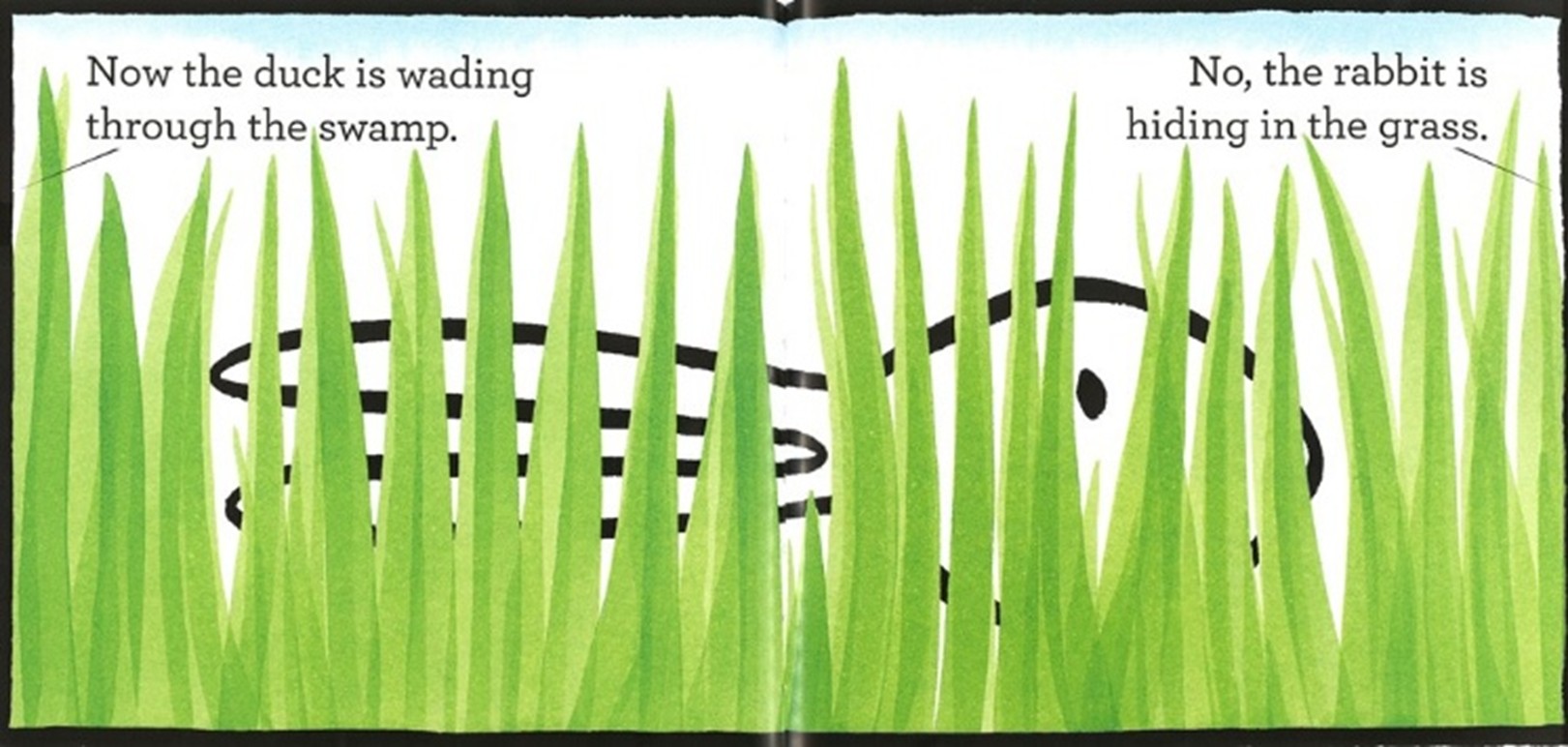
- “Why would one of them think this looks like a swamp and the other think it’s grass?”
Make Predictions
You can extend perspective-taking beyond the book by using comments and questions to discuss what might happen next. For example, on the last page when a new optical illusion is shown, you might say, “Now one of them sees an anteater and the other one sees a brachiosaurus! What do you think they’re going to do now?” Wait up to 10-seconds for the child to respond. If they don’t answer your question, you can model a response like, “I’m thinking they’re going to have a new argument about whether this picture is an anteater or a brachiosaurus!”.
Continue Building Perspective-Taking After Reading
Learning about how others think and feel doesn’t have to stop when the book ends! Powerful perspective-taking moments come when children connect the book to their own life. For example:
- “Remember when you and your sister disagreed about whether that dog was friendly? You were both looking at the same dog ― just seeing him differently.”
Perspective-taking develops during everyday moments. Here’s how you might continue talking about different perspectives:
- Getting dressed: “You like your fuzzy sweater, but your brother thinks his feels too hot. It’s the same sweater but you have different opinions―just like those different opinions in Duck! Rabbit!”
- During a meal:“You think broccoli tastes bad, but Dad loves it. You two see the same broccoli but have a very different feeling about it.”
Perspective-taking is a skill that grows with practice, so keep reading and talking about different points of view together.
Happy reading!
More Resources
The strategies in this Book Nook post are drawn from Hanen’s practical, research-based guidebooks for building emergent literacy. Explore the links below to learn more about how these guidebooks can support you.
For Parents I'm Ready! guidebook
For Educators ABC and Beyond guidebook
Are you a professional who consults with families and/or front-line educators to support emergent literacy with children? You may be interested in Hanen Launchpad to Literacy™, the Hanen Centre’s workshop designed to nurture emergent literacy with children aged 3-5.