

This month's Book Nook topic is...
Turn Book Reading into a Conversation with
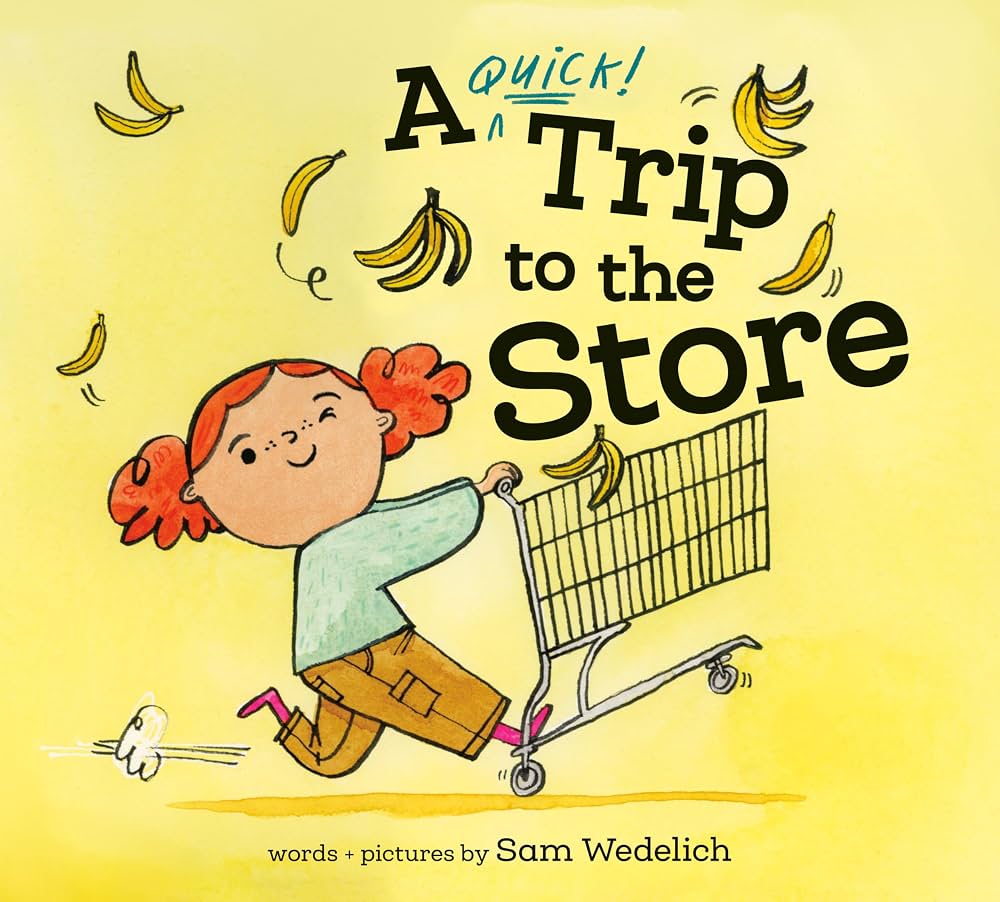
A Quick Trip to the Store
Children get the most out of book reading when they’re actively involved – in other words, when adults read with them, rather than to them. This means giving children more opportunities to join in and contribute to conversations about the story. These conversations help build children’s language and early literacy skills.
When you turn book-reading into a conversation, children are more likely to:
- Understand the story
- Share their ideas and interests
- Connect what happens in the book to their own life
The Book:
A Quick Trip to the Store by Sam Wedelich
Why we chose this book
In this book, we meet a young girl who loves bananas. When they run out of bananas at home, the girl and her mom must take a trip to the store. What should be a simple task turns into a messy ordeal. This simple, fun story offers many opportunities to pause and invite children to share their own experiences and ideas about grocery shopping.
First… Observe, Wait and Listen™
The first step in turning book reading into a conversation is to Observe, Wait and Listen™. This means finding times to wait, without talking, while you observe the child to see what interests them about the story. When you wait, you may notice the child use a facial expression, make a sound, point or say something about the story. Some good times to wait during book reading are:
- Before or after you turn a page
- After you make a comment about the story
- After you point to and comment on an illustration
- When something exciting happens in the book
- After you ask a question
Then… Follow the Child’s Lead
Once you know what the child is most interested in, you can build the conversation around that. In other words, you can Follow the Child’s Lead by making a comment about what they noticed or communicated.
For example, read the title and then wait before you open the book. If the child points to a banana on the cover of the book, you could say, “That’s a yummy banana!” After you comment, wait again to see what the child says or does next.
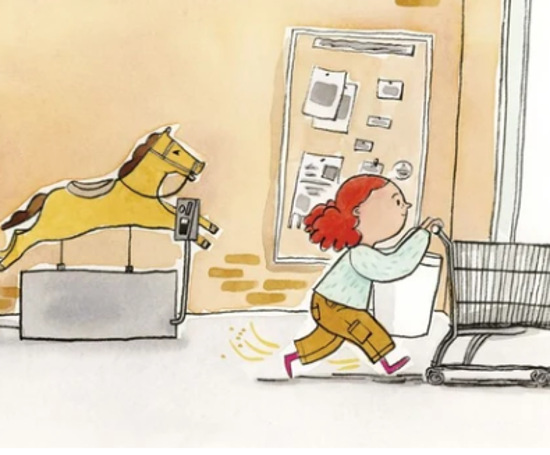
As you move through the book, pause to give the child time to look at the pages and observe to see what has captured their interests. Then respond to the child’s interests or messages. For example, if the child points to the girl pushing the cart and says, “She wants bananas”, you could say, “Yes, she’s looking for bananas. I wonder what else she might find.” Then, wait again to encourage the child to take another turn and keep the conversation going.
Try to keep the conversation going back and forth by using a balance of comments and questions related to the child’s interests. Ideally, you’ll be able to keep the conversation going until you’ve each taken two or three turns.
The first time you read the book
The first time you share a new book with a child, the idea is to help them build an overall understanding of the book: who it’s about, who’s in it, and what’s happening.
As you read, pause occasionally to give the child time to look at the page and notice what interests them. Use these moments to have short conversations about what they see or what is happening in the story.
Later Readings
Once the child is familiar with the story, you can pause more often and have longer conversations about the book. Use these later readings to extend the child’s thinking by talking about their ideas, encouraging them to predict, explain, or problem solve and connecting the story to their own experiences. For example, during later readings of A Quick Trip to the Store, you can encourage deeper thinking by asking questions such as:
- “What do you think will happen the next time they go to the store?”
- “What would you do if you had so many bananas?”
- “When you go grocery shopping, what is your favourite thing to buy?”
After asking a question, remember to wait to give the child time to respond. Then, keep the conversation going by building on what they say.
Revisiting the same book encourages children to contribute to the conversation in new ways each time.
Happy reading!