
Learning Language: Does Quality or Quantity Matter Most?
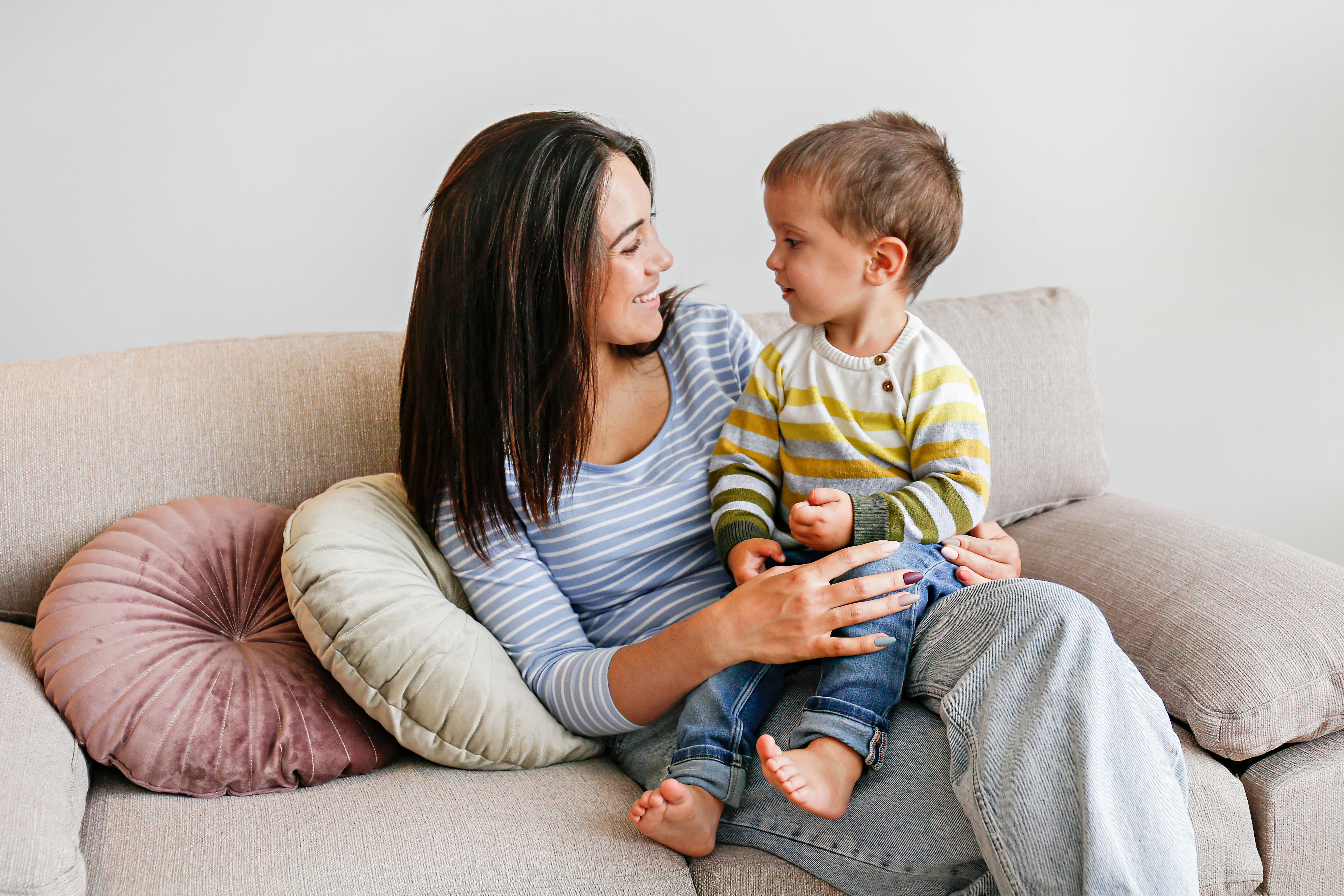
It is common for parents to ask what they should be doing to help their child communicate.
Should they simplify what they say? Label everything around them? Use lots of different words? Or is the most important thing simply to talk more?
These are great questions, and it isn’t always obvious what matters most.
A recent scientific review helps shed some light on this question. The researchers examined the findings from 71 studies involving almost 5,000 children to analyze how different aspects of caregiver language input relate to children’s language development. Their findings reinforce an important message: both the quantity and quality of the language children hear matter.
Is Talking More the Answer?
The quantity of language children hear as well as the number of opportunities for them to participate in interactions, is certainly important. But it’s not the only thing that matters. Simply exposing a child to more words doesn’t necessarily mean those words will be meaningful to them, or that they will learn them.
Think about a time you listened to someone speak about a new topic that was not of interest to you. You may have heard hundreds of words but likely retained very little. On the other hand, if someone spoke about something you were interested in, it was likely much more meaningful, and you retained some of what you heard.
The same principle applies to young children. When considering what caregivers should say, it’s important to not only think about how much language children hear, but also about the quality of the language to ensure it’s meaningful to the child.
What Does the Research Tell Us About Quantity and Quality?
The scientific review examined four measures of caregiver language during parent-child interactions:
- Number of utterances caregivers used
- Total number of words caregivers used
- Number of different words caregivers used
- Length or complexity of caregivers’ utterances
The first two measures captured the quantity of caregiver language. The other two reflected aspects of quality, including the variety and complexity of the language children heard.
Importantly, all four measures were associated with children’s language development. In other words, children’s language outcomes were related not only to how much language caregivers used, but also to how varied and complex that language was.
This finding helps broaden the conversation beyond advising parents to “talk more to your child.” Caregivers shouldn’t simply increase the amount of language they use. Instead, they can use the opportunities present in everyday interactions to provide both the quantity and quality of language children need.
Everyday Interactions Support Language Quality and Quantity
One of the strengths of caregiver-implemented language intervention is that it does not require parents to create additional time for language learning. Everyday interactions and routines like getting dressed, eating breakfast and sharing books all provide opportunities for back-and-forth interaction. When caregivers notice what captures their child’s attention, wait for their child to communicate and then respond contingently, the language is connected to the child’s immediate experience.
This is particularly important because quantity and quality don’t need to be treated as separate goals. Responsive, back-and-forth interactions can support both. As children take more turns, caregivers have more opportunities to respond contingently. And because those responses are closely matched to the child’s focus and message, the language the child hears is likely to be more meaningful.
Using Hanen Strategies to Support Quantity and Quality
There are several Hanen strategies parents can use to provide both the quantity and quality of language children need.
Observe, Wait and Listen™
Observe, Wait and Listen™ (OWL™) encourages caregivers to observe what has captured their child’s attention, wait for their child to take a turn and listen closely to what their child is trying to communicate. When caregivers OWL™, they gain valuable information about how to respond in a way that will be meaningful to their child.
Follow Your Child’s Lead
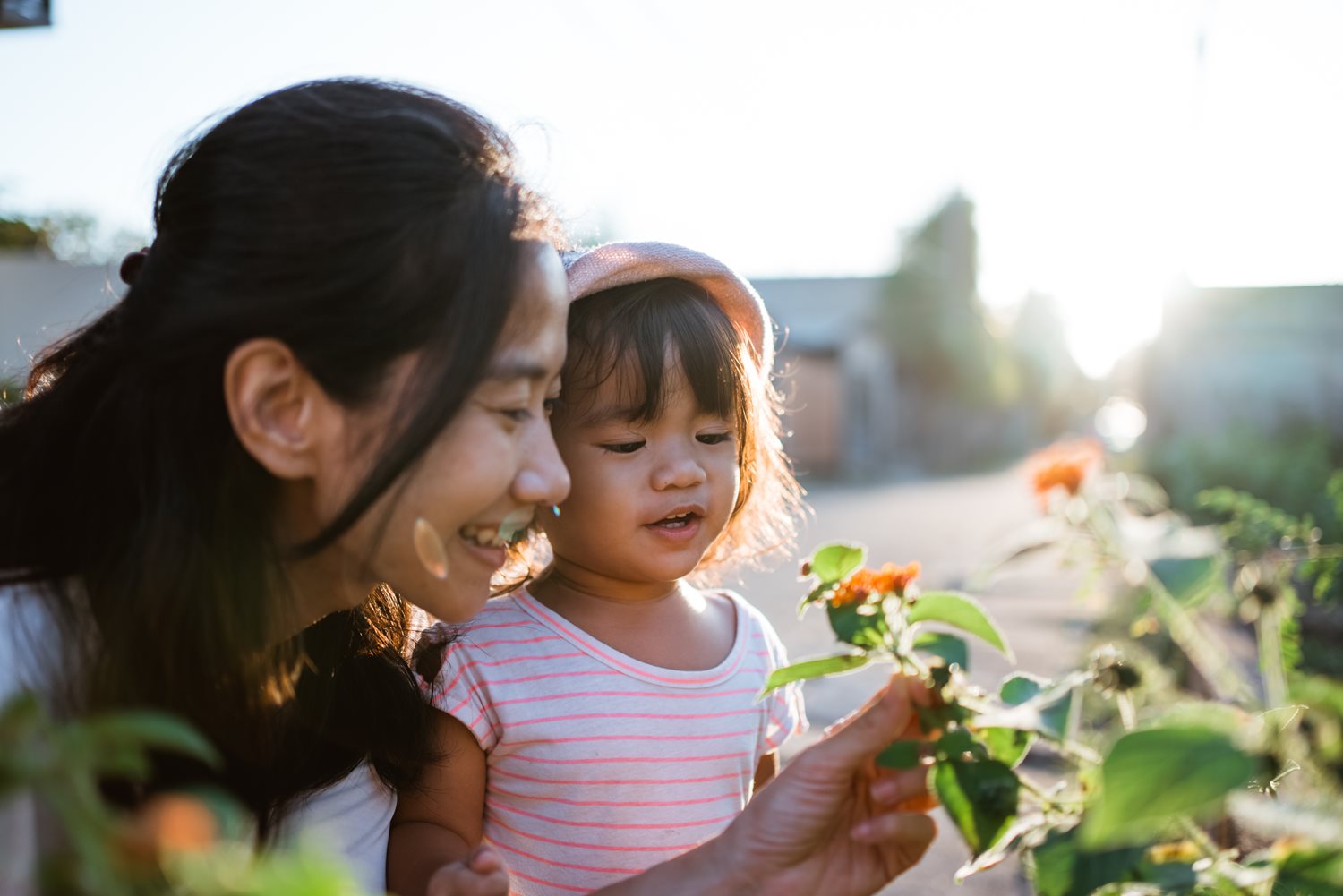
Once their child communicates, caregivers can follow their child’s lead by responding promptly and matching their response to the child’s focus or message.
Imagine a child notices a ladybug crawling on a flower, points and makes a sound. A caregiver might respond by saying, “It’s a ladybug!”
This response does more than add words to the interaction. It adds language at that very moment, connecting what the child is interested in and thinking about with the words they are hearing. And when the caregiver’s response encourages another child turn, the interaction continues, creating additional opportunities for language input.
In this way, following the child’s lead can support quantity, by keeping the interaction going, as well as supporting quality, by ensuring that caregiver language is responsive and meaningful.
Use Short, Grammatical Sentences
To provide the quality of language children need, caregivers should use short, grammatical sentences that are appropriate for their child’s current language level.
For example, rather than saying, “Mama open door,” a caregiver might say, “Mama’s opening the door.” The sentence is still relatively short and easy to process but also provides a grammatically correct model the child can learn from.
Use a Variety of Word Types
This study highlights an important aspect of language quality: exposing children to a variety of word types during everyday interactions was positively associated with better language outcomes.
It’s natural to name objects, and these labels provide important vocabulary. But everyday interactions also offer opportunities to model other word types, like action words (verbs), describing words (adjectives), location words or feeling words (emotions). The most important thing is that the words the caregiver uses match the child’s interests and messages.
For example, when a child holds up a teddy bear, a caregiver might describe it as soft or fluffy. If the child hugs it, the caregiver might talk about how they are hugging or squeezing it. If the child is delighted by the bear, the caregiver might talk about how they are happy or excited.
The key is not to add vocabulary words just because – but rather to add varied language that connects naturally to what the child is already interested in and communicating about.
To Summarize…
The findings of this review support a responsive, interaction-based approach to early language intervention. Quantity matters, but so does variety and complexity. And back-and-forth interactions between children and the important adults in their lives are fundamental to exposing children to language that includes all of these important factors.
Caregivers can provide rich language input within the interactions they have with their child by using Hanen strategies such as:
- Observe, Wait and Listen
- Follow Your Child’s Lead
- Use short, grammatical sentences
- Use a variety of word types
When caregivers make everyday interactions more responsive and conversational, both the quantity and quality of the language children experience increase… one meaningful interaction at a time.
Similar articles by tag: